Gemstones for pregnancy jewellery and what they traditionally mean
Rose quartz for tenderness, moonstone for new beginnings, lapis for wisdom. A plain-spoken guide to the stones used in pregnancy necklaces, with care tips.
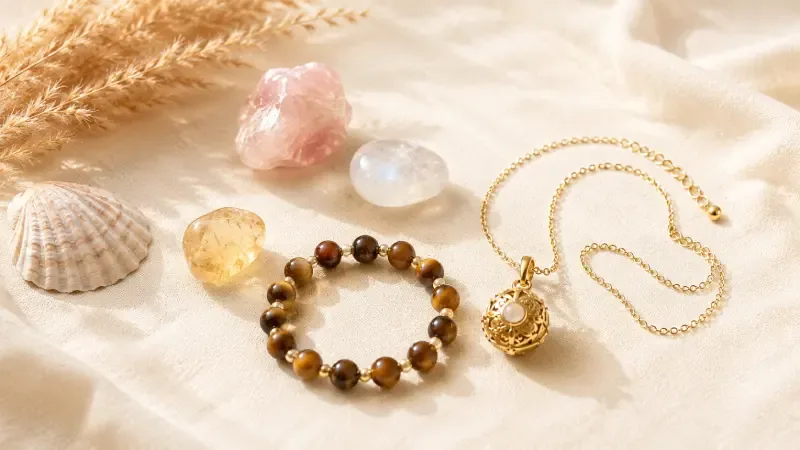
Short answer: Gemstones in pregnancy jewellery are chosen for colour and symbolism: rose quartz for love, moonstone for new beginnings, amethyst for calm, lapis for wisdom. These are traditions, not medical claims, so pick the colours you like looking at.
Ten stones and what they traditionally mean
These meanings come from folklore and from the way people use stones today. They are a starting point for choosing, not facts about what a stone does. The hardness figures (Mohs scale, out of 10) tell you how easily a stone scratches.
Rose quartz
Love, tenderness and family. A soft, translucent pink that is the most popular stone in pregnancy jewellery.
Hardness 7. Keep it out of strong sunlight, which can fade the colour.
Moonstone
New beginnings and the cycles of the moon. Milky white with a pale blue shimmer. It is a June birthstone.
Hardness 6 to 6.5. It scratches more easily, so keep it away from harder stones.
Amethyst
Calm and clarity. Purple, from pale lilac to deep violet. It is the February birthstone.
Hardness 7. Strong sunlight can fade it over years.
Lapis lazuli
Wisdom and protection. Deep blue with flecks of gold-coloured pyrite.
Hardness 5 to 5.5. It is soft, so avoid water, chemicals and knocks.
Aquamarine
Serenity and water. A pale sea blue. It is the March birthstone.
Hardness 7.5 to 8. One of the more durable stones in this list.
Tiger’s eye
Courage and steadiness. Golden brown with a silky band of light that moves as you turn it.
Hardness 6.5 to 7.
Citrine
Joy and optimism. Yellow to amber. It is a November birthstone.
Hardness 7.
Green aventurine
Luck and growth. Soft green with a fine sparkle.
Hardness 6.5 to 7.
Amazonite
Balance and calm. Turquoise-green with pale veins.
Hardness 6 to 6.5.
Labradorite
Transformation. Grey with flashes of blue, green and gold that appear at certain angles.
Hardness 6 to 6.5.
Choosing by colour
If the meanings feel like too much, choose by colour. Pink stones read as tender, blue as calm, green as fresh, yellow and amber as warm, white and cream as gentle. Mix two or three tones that you like against your usual wardrobe.
Choosing by birthstone
A birthstone is the simplest way to turn stones into something personal. Pick the baby’s due month, then add the parents’ months or a sibling’s. The full list, with bead alternatives for expensive stones such as emerald and ruby, is in our birthstones by month guide.
Looking after gemstone beads
- Wipe them with a soft, slightly damp cloth, then dry them.
- Keep soft stones such as lapis, moonstone and labradorite away from knocks and from harder stones in the same pouch.
- Avoid perfume, hairspray and cleaning products on the beads, and never use an ultrasonic cleaner on stone jewellery.
- Keep pink and purple stones out of strong, direct sun when you store them.
Symbolism, not medicine
There is no scientific evidence that gemstones treat or heal anything. We describe what stones traditionally stand for so you can choose pieces that mean something to you. If you have a health concern in pregnancy, talk to your midwife or doctor.
Questions people ask
Do gemstones have healing properties?
There is no scientific evidence that they do. People choose stones for their colour and for the meanings tradition gives them. For any health concern in pregnancy, speak to your midwife or doctor.
Which stone is most popular for pregnancy?
Rose quartz is the most common choice, followed by moonstone and amethyst. Many people also pick the baby’s birthstone.
Are natural gemstones safe to wear on skin?
Quartz, amethyst, citrine and most of the stones above are routinely worn as jewellery. Metal fittings are more often the cause of skin reactions than the stones themselves.
Can I mix different stones in one necklace?
Yes. Most of our personalised necklaces combine two to four. Choose stones of similar hardness if you can, so they don’t scratch each other.
Keep reading
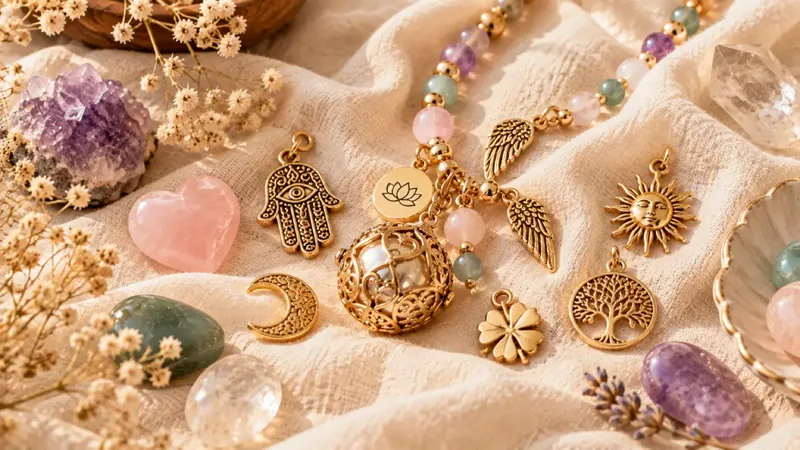
Birthstones by month
The stone for each month, with bead alternatives.
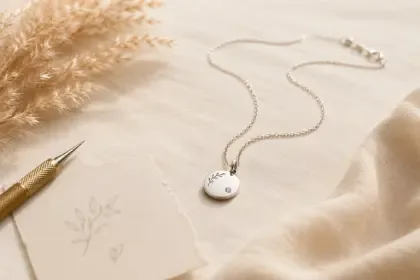
Personalised pregnancy necklace
Engraving, birthstones and charms, and how to order.
Colours and their meanings
What silver, gold and pink traditionally stand for.
Made to order in France
Shop on Etsy (opens Etsy in a new tab)