Harmony ball colours: what silver, gold and pink traditionally mean
A short guide to the traditional meanings of the colours on a harmony ball, and why you can choose what you like.
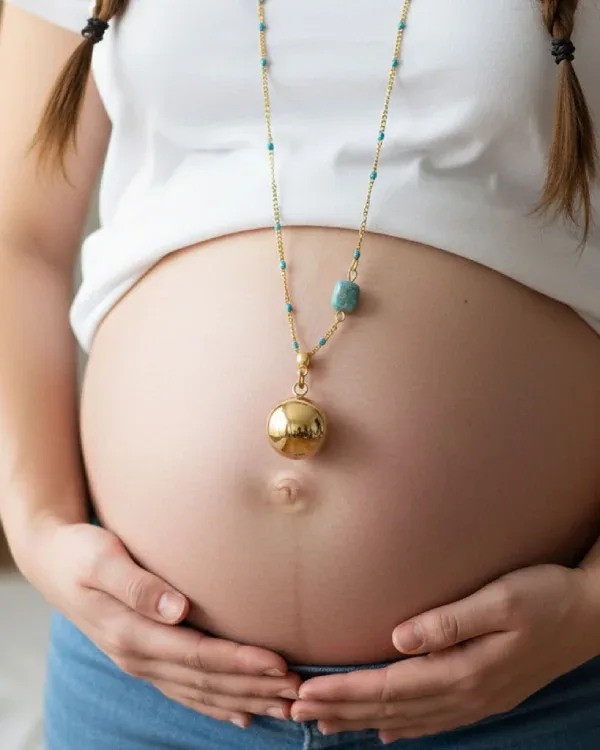
Short answer: Traditionally, silver stands for calm and the moon, gold for warmth and the sun, pink for tenderness, blue for calm, green for growth and yellow for joy. These are symbols, not rules, so choose the colours you enjoy.
A note before the colours
These are traditional associations, not rules, and they change from one culture to another. Pink for girls and blue for boys is a convention that is only about a century old. Choose the colours you like looking at.
Silver and gold
Silver
Linked with the moon: calm, reflection and quiet strength.
Looks best with blues, lilacs and whites.
Gold
Linked with the sun: warmth, joy and celebration.
Looks best with pinks, creams and ambers.
Stone colours
Pink
Tenderness and love. Rose quartz is the classic.
Blue
Calm and protection. Lapis and aquamarine.
Green
Growth and luck. Green aventurine and amazonite.
Yellow and amber
Joy and optimism. Citrine and tiger’s eye.
Purple
Calm and clarity. Amethyst.
White and cream
New beginnings. Moonstone and pearl.
For the stones themselves, see gemstones for pregnancy jewellery and the birthstone guide.
How to choose
Start with the metal that suits your jewellery, then choose one or two stone colours. If you want the baby’s birthstone, begin there. Wear them with the clothes you actually wear.
Questions people ask
What colour harmony ball should I choose?
Choose the colours you like. Silver suits cool tones and gold suits warm ones.
Do the colours of a harmony ball have meanings?
Traditionally yes, but they are symbolism rather than fact.
Does a pink or blue harmony ball mean a girl or a boy?
No. That is a convention. Any colour is fine.
Keep reading
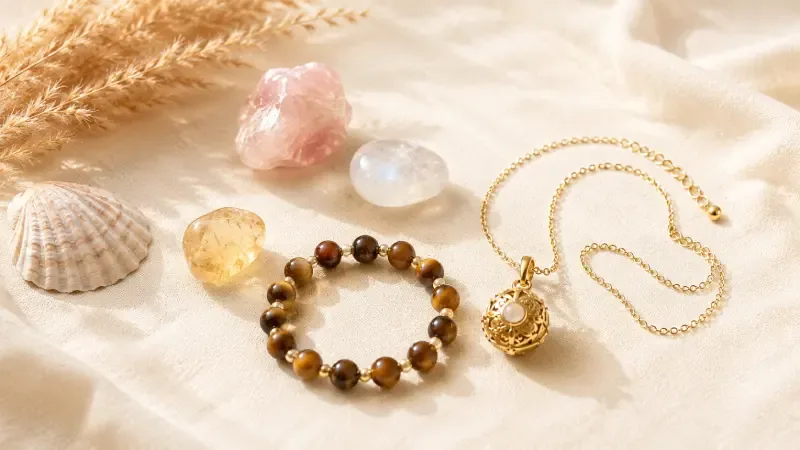
Gemstones and their meanings
Ten stones, what they traditionally stand for, and how to care for them.
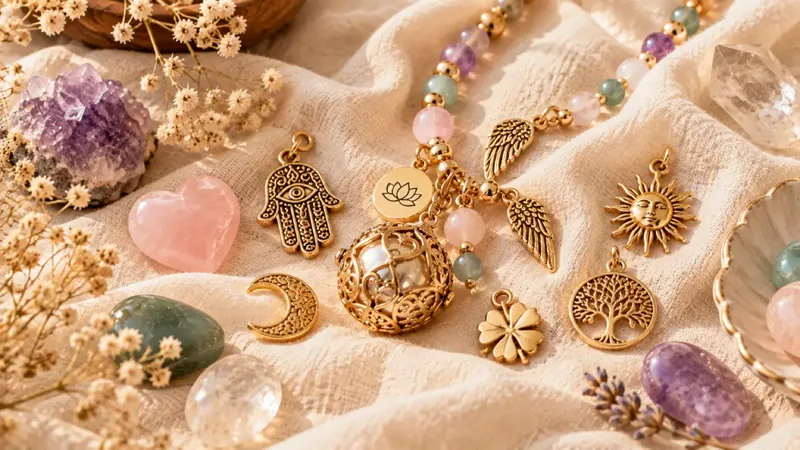
Birthstones by month
The stone for each month, with bead alternatives.
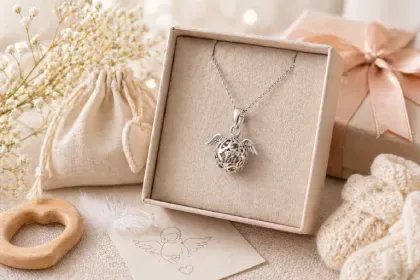
Silver ball necklace guide
What 925 means, shapes, and how to avoid tarnish.
Made to order in France
Shop on Etsy (opens Etsy in a new tab)